


The navigation has been bound to the data source. Select the navigation category on the panel. To change the navigation style, modify it through the CSS code mode; to rebind the data source, enter the code mode and search for 【.vpHide:not([nd_deleted])】 and comment it out.
08
2024
-
11
Han Xia: Lighting Design and Attention
Category:
【概要内容】
Light, a medium that appeals to our sense of sight, can shift our attention through changes in brightness and color, thereby influencing the brain’s information-processing mechanisms. What lies at the heart of this dynamic interplay between light and attention? After reading this insightful article, you may gain a more concrete awareness and a clearer understanding of lighting design.
Han Xia
Design Director, Institute of Light Environment, Central Academy of Fine Arts
Deputy Director of the Environmental Committee of the Beijing Illumination Society
China Lighting Network’s Top Ten Outstanding Designers
I. Selective Processing of Visual Attention
I recently read a book on the attention economy, which argues that attention will become one of the most powerful driving forces in future society. Anything that captures your attention may ultimately seize your time or your money.
Research on attention originated in cognitive psychology and neuroscience. The process by which the mind cognitively processes information is accompanied by the operation of attention; attention directs the mind to focus on certain matters while devoting little or no attention to others.
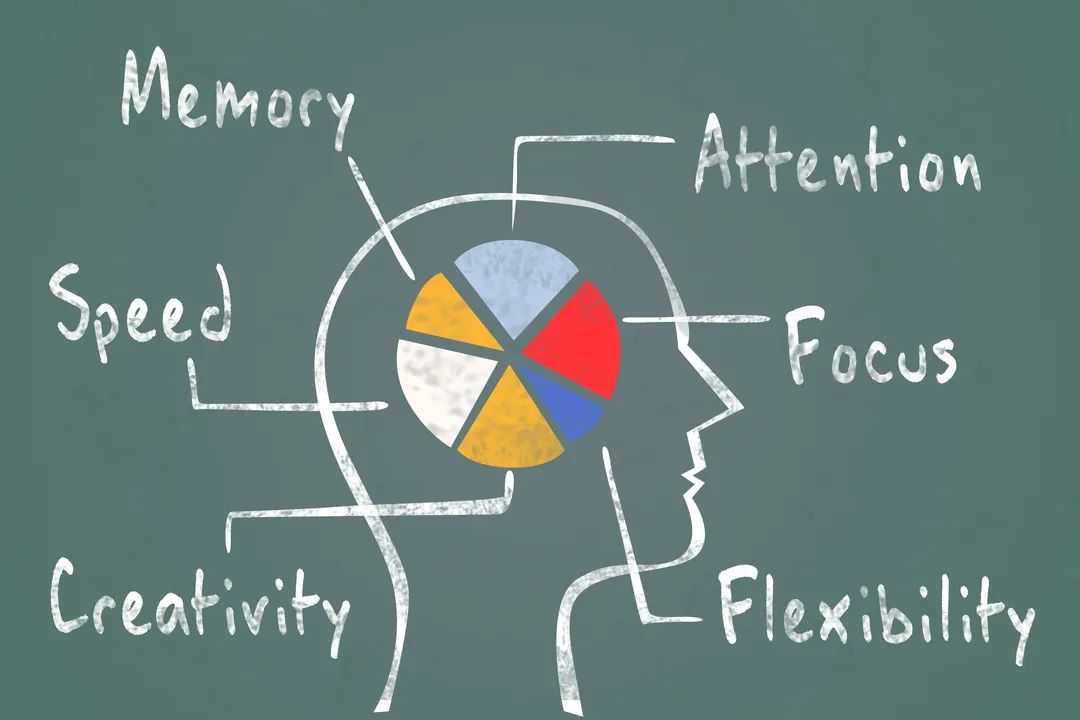
Later, as experimental research and neuroscience advanced, a tentative conclusion emerged: any design or object that aligns with the brain’s cognitive patterns can capture attention, and such attention‑grabbing elements generate traffic and economic value. Having been introduced to these insights, I too sought to apply this theory to inform and guide my work in lighting design.
Because the lighting design process is analogous to the way attention processes information.
When we open our eyes, light carrying a wealth of information enters the retina and stimulates the human visual system, while the brain’s visual attentional cortex performs selective processing of this information in advance.
The selective nature of visual attention enables us to focus solely on information relevant to the current task, and our lighting design likewise seeks to highlight key and salient information—this represents a response of lighting design to the brain’s cognitive mechanisms.
II. Reasons Why Lighting Needs to Process Information
In the vast world, countless pieces of information arrive in an instant, posing a challenge to our brain’s capacity for information processing. Meanwhile, human cognitive abilities are constrained by cognitive resources—essentially, by the brain’s physical limitations.
Humans cannot process all information at once; all data must pass through a selective attention mechanism before entering consciousness. Light stimulates the visual cortex, triggering attentional filtering of incoming information. Therefore, by controlling light, we can pre‑process information in advance.

The purpose of doing so is to ensure that the message we wish to convey successfully captures attention. Generally, when people view an image, their visual attention first takes in the overall scene and draws on past experience to form an initial judgment; they then focus more closely on specific local details, using these as evidence to further validate their assessment.
Throughout the process, attention is focused primarily on specific local regions—precisely because the brain’s visual cortex regulates attention, filtering out irrelevant information. This approach significantly enhances cognitive efficiency, thereby strengthening the extraction of salient features and facilitating the formation of long-term memory. Such memories may subsequently serve as “anchor points” of value, exerting profound and often immeasurable influences on future behavior.
Given that, when viewing an image, people direct their attention to specific areas based on experience and judgment, only the visual information that captures this attention enters conscious awareness. Therefore, our lighting design seeks to leverage the mechanisms of attentional processing, delivering visual information that is more readily perceived and processed by the brain, thereby enhancing the efficiency of visual communication.
III. The Mechanisms of Attention
Our attention is like a beam of light cast from a towering lighthouse—only what lies within that beam comes into focus. Within the beam lies awareness; beyond it, there is darkness.
Darkness is excluded from the scope of visual perception. This active suppression of irrelevant information through darkness—preventing extraneous stimuli from interfering with the brain’s critical processes—bears a striking resemblance to the mechanisms of attention.
Another notable phenomenon related to attention is known as the “command stick effect,” which, to some extent, represents another manifestation of the cognitive lighthouse model.

During a symphonic concert, the conductor typically wields a baton to guide the orchestra. With the stage backdrop and musicians’ attire usually in dark hues, the slender, light-colored baton stands out vividly under the spotlight, directing and focusing attention so that the performers can play with greater concentration and cohesion.
The baton against a dark background perfectly aligns with the brain’s attentional processing of information, greatly enhancing the performance by highlighting the conductor’s cues while suppressing irrelevant stimuli.
This baton‑wielding phenomenon highlights another key feature of attention: according to cognitive science, although the brain can process four to five tasks simultaneously, its information‑processing efficiency declines when it allocates attention to each task.
In addition to highlighting certain information and suppressing others, attention can also distill and compress information. The amount of information we encounter in daily life far exceeds our brain’s processing capacity; fortunately, our brains are remarkably efficient and do not clumsily process this vast stream of data piece by piece.

The brain extracts and categorizes salient features, storing them in memory, which greatly enhances information-processing efficiency. However, this approach has a drawback: personalized, non‑generalizable information is discarded, leading to a loss of individuality.
In the realm of art, the works of great artists transcend the barriers of time and space, consistently capturing our attention. Advances in modern neuroscience have confirmed that these works align with the brain’s mechanisms of attention and cognition. Such insights into the relationship between our attention, artistic works, creation, and design can directly inform our approach to lighting design.
Science is in constant progress, and those with a keen artistic intuition always remain at the forefront of their time. Yet we are fortunate: advances in science enable us, through study, to achieve remarkable artistic results as well.
IV. The Effect of Attention on Information Transmission
The allocation of attention amplifies signals and alters the signal-to-noise ratio.
An intriguing phenomenon—the cocktail party effect—refers to the way ambient noise at a social gathering often drowns out conversations, yet you can effortlessly pick up your friend’s voice when you focus. This is because attention amplifies the relevant signal, thereby altering the signal-to-noise ratio.

We shift our attention among different sound sources, and selective listening comes so naturally that we often fail to notice these shifts. Yet replicating this effect with computers or artificial intelligence proves exceedingly challenging, suggesting that the mechanism underlying this heightened attention is highly complex and uniquely human.
Since the brain can direct our attention and alter the balance between information and its environment, thereby amplifying certain stimuli, could we likewise employ techniques from lighting design to achieve a similar amplification effect?
Another theory concerning how attention modulates the transmission of information is called feature integration theory. It examines how visual information is processed in the early stages of perception and was first proposed by Treisman, Sykes, and Gelade.
Because different regions of the cerebral cortex are responsible for processing distinct types of information, an object’s color, shape, brightness, depth, volume, and motion are detected by specialized visual neurons.

In the early stages of attention, once this categorized information has been collected, it is transmitted to the brain, where the fragmented feature representations are subsequently re-integrated to form a coherent object, thereby constituting a complete perception of that object.
If we fail to devote sufficient attention, we cannot integrate information effectively. Lighting design—and other design disciplines as well—can employ holistic design strategies that facilitate feature integration, thereby achieving a comprehensive representation of the subject.
V. Types of Attention
The brain’s attentional capacity is remarkably powerful. So how can we leverage this property to enhance our design? We need to distinguish between two types of attention: exogenous attention and endogenous attention.
Exogenous attention is triggered by external stimuli. For example, if you’re concentrating on a lecture and suddenly hear construction noise nearby, your attention is drawn to it. Exogenous attention is a form of passive attention that arises rapidly and typically lasts only about 0.1 to 0.2 seconds.

Why is this the case? Because the human brain’s neural circuitry incorporates a mechanism of inhibition of return: once it detects an external stimulus, the nervous system instinctively redirects your attention to other targets. Consequently, relying solely on external stimuli to capture attention often fails to produce optimal results.
In addition to the inhibition of return effect, the characteristics of exogenous attention itself, as well as the ratio between exogenous attention and the background, also influence the effects of exogenous attention.
Just as lighting design takes into account the luminance relationship between an object and its background, two objects with identical luminance may appear brighter when placed against backgrounds that differ significantly in brightness.

This contrast in brightness and the resulting perceptual illusion, from a physiological standpoint, are related to the antagonistic interactions of retinal ganglion cells: under a light‑colored background, the activity of these cells is suppressed, causing the object to appear less bright.
However, against a dark background, to achieve visual balance, retinal ganglion cells become more active, making objects appear slightly brighter. By understanding the underlying principles of this phenomenon, we may be able to leverage this feature to create even more engaging designs.
In general, exogenous attention arises rapidly and lasts for a brief duration, often making it difficult to engage deeply or to form enduring memories and experiences—this is one of its defining characteristics.
Endogenous attention operates in a top-down manner, with individuals directing their attention according to their needs and goals. It unfolds more slowly, lasts longer, and processes a greater volume of information, thereby facilitating the formation of vivid memories and experiences—this is one of its key advantages.
If endogenous attention is initiated solely by an individual’s intentions, how can it inform our design?
Screenwriters know that humans universally seek universal values, and this intrinsic attention can give rise to many compelling, engaging stories. Thus, intrinsic attention not only arises spontaneously but can also be elicited through deliberate narrative techniques.
Exogenous attention can quickly capture a person’s focus, while endogenous attention enables sustained attentional engagement. Therefore, a successful design must be able to simultaneously engage both exogenous and endogenous attention.
From the Renaissance through Impressionism and the modern movements, generations of perceptive artists have explored patterns of attention and cognition through their artistic practice, grounding their work in these insights and ultimately achieving remarkable accomplishments. As science has advanced, these cognitive patterns have been systematically elucidated, becoming knowledge that ordinary people can acquire through study.
Lighting design, like other forms of design, should be informed by an understanding of the brain’s cognitive patterns, enabling designers to capture attention more effectively and facilitate the efficient transmission of information—since improved information‑delivery efficiency is a driving force behind social progress.
Disclaimer: This article is reposted solely to disseminate additional industry information. The views expressed herein are those of the author alone and do not reflect the endorsement of MoYing Lighting, nor do we assume responsibility for their accuracy. Should any infringement be involved, please contact us for resolution.
Brand

-