


The navigation has been bound to the data source. Select the navigation category on the panel. To change the navigation style, modify it through the CSS code mode; to rebind the data source, enter the code mode and search for 【.vpHide:not([nd_deleted])】 and comment it out.
08
2024
-
11
Light | How to Help Those Who Suffer from Insomnia?
Category:
【概要内容】
In the world of “One Hundred Years of Solitude,” Gabriel García Márquez inflicts insomnia upon every inhabitant of Macondo: they toil day and night, finishing their work in no time, only to find themselves with nothing to do at three in the morning, listening to music and counting the notes of a waltz. Those who long for sleep do so not out of exhaustion but out of nostalgia for slumber, exhausting every possible way to stave off rest.
In Márquez’s writing, insomnia is a plague that spreads through the village of Macondo, tormenting everyone’s nerves and rendering them forgetful.
In today’s fast-paced, stressful reality, insomnia has become a challenge that almost all of us face. According to the latest survey by the Chinese Sleep Research Society, more than 300 million people in China suffer from sleep disorders, with those born in the 1990s and 2000s experiencing the most pronounced sleep problems.
Anxiety is likely a major cause of insomnia, especially since the onset of the pandemic. With staying at home becoming the norm, face-to-face interactions have declined, and uncertainty in daily life has intensified—factors that have profoundly impacted people’s physical and mental well-being, leaving many struggling to fall asleep each night.
However, the causes of insomnia extend far beyond this; even the “light” we take for granted can disrupt sleep. The Earth’s rotation and the sun’s illumination give rise to a 24-hour rhythm that governs our sleep patterns: we stay awake in daylight and sleep in darkness. Yet for many people who struggle with sleep, this natural cycle is completely disrupted.
01
Lighting and Health: Biological Rhythms
Light exerts a powerful influence on human physiology and behavior; it not only regulates circadian rhythms and endocrine cycles but can also disrupt these rhythms, leading to health disorders.
And how do these rhythms arise?
In our eyes, there exists a type of photoreceptor cell called Intrinsically Photosensitive Retinal Ganglion Cells (ipRGCs) These photoreceptors, evenly distributed across the retina, appear to be unrelated to vision; however, when stimulated by light, they transmit non-visual information to the brain’s master clock—the suprachiasmatic nucleus (SCN). It is responsible for regulating and controlling all biological clocks and hormone secretion.
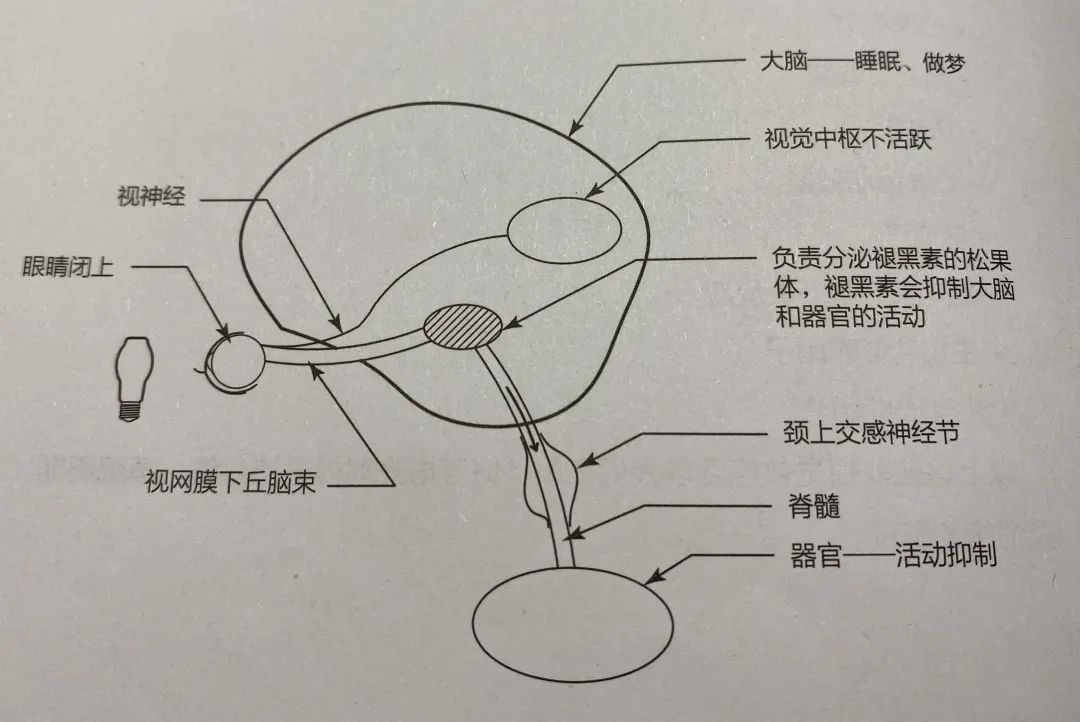
▲ Neural pathways for circadian regulation (dark conditions)
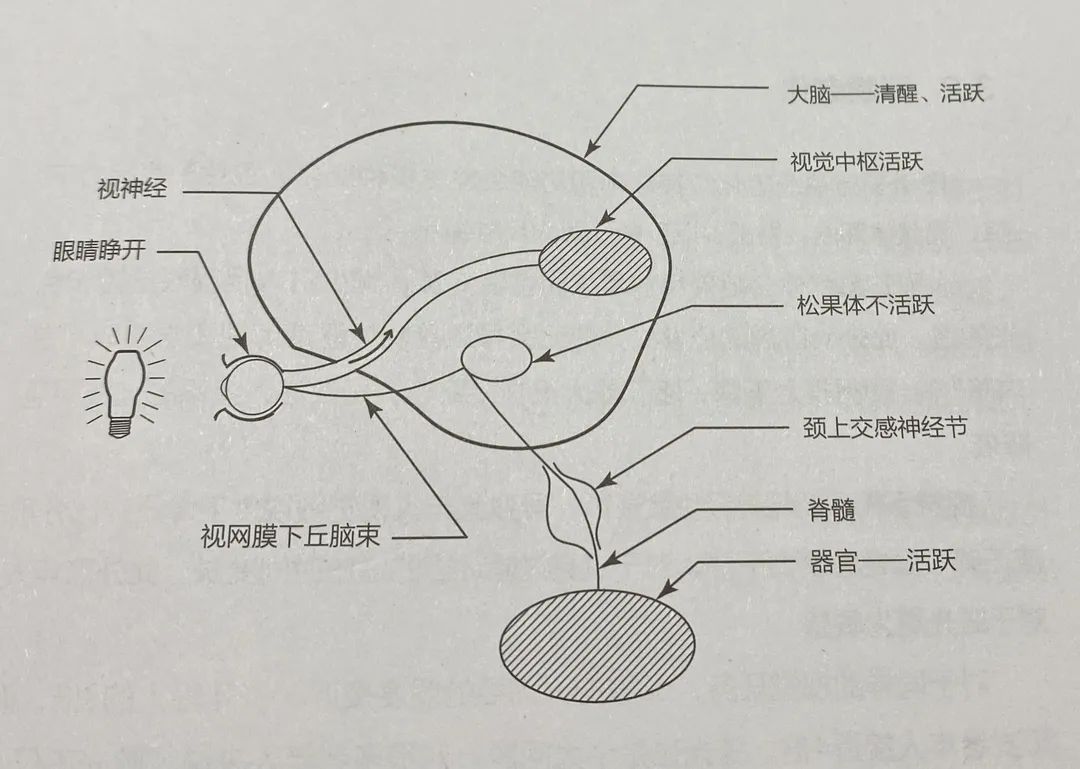
▲ Neural pathways for circadian regulation (in light conditions)
Among them, three major hormones are most strongly affected: the first hormone is 5-Hydroxytryptamine , an emotional factor that repeatedly elevates our performance throughout the day; serotonin also plays a crucial role in regulating numerous disorders, such as depression and anxiety. The second type is Cortisol , it can participate in stress management and regulate blood pressure, glucose metabolism, and the immune system; the third type is Melatonin , it is closely related to our sleep.
In mammals, melatonin secretion increases at night and is suppressed during the day in the presence of ample sunlight. In addition to promoting sleep, melatonin also regulates numerous physiological processes in the human body.
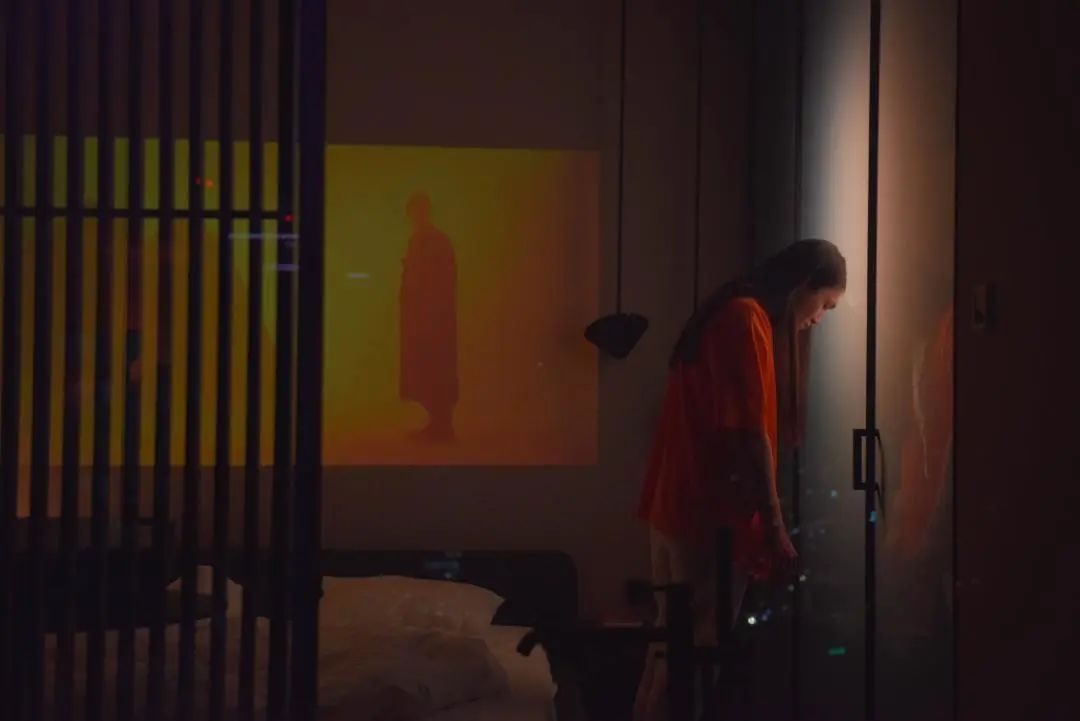
▲ Image source: Pexels
However, in modern society, even in the evening our eyes are exposed to abundant artificial lighting, and… Modern, high-efficiency light sources emit an increasingly pronounced short-wavelength component in their spectra. Compared with incandescent and halogen lamps, they can reduce melatonin secretion by approximately 40%, leaving people feeling alert for extended periods after turning off the lights and making it difficult to fall asleep.
Overall, variations in natural light shape the circadian rhythm; however, exposure to artificial lighting that is out of sync with this biological clock can adversely affect both physical and mental health, including sleep.
02
Nature · Health · Light
The physiological and psychological effects of light are closely linked to its quality, encompassing factors such as intensity, wavelength, and duration of exposure. Traditional electric lighting offers only two settings—on and off—whereas truly natural illumination should evolve continuously over time.
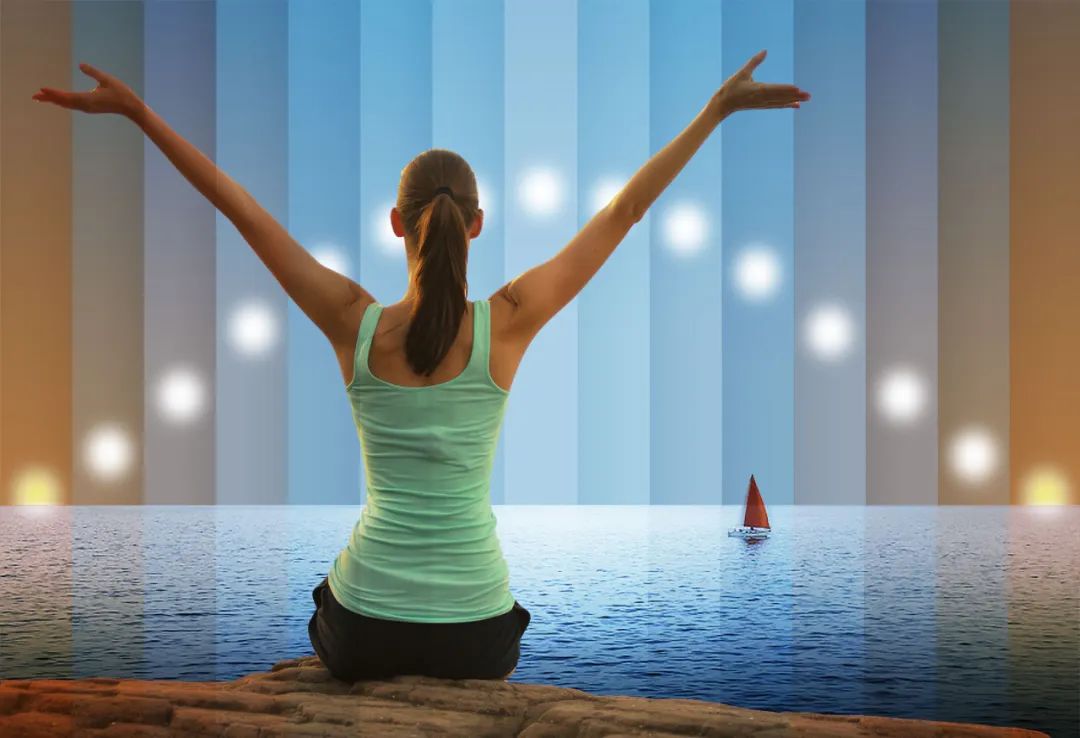
- ▲ Image source: Gamma
During the day, it emits high‑intensity light rich in short‑wavelength blue light, helping people stay alert and productive; at night, it gradually transitions to softer, lower‑intensity light with a higher proportion of orange and red wavelengths. This dynamic lighting helps maintain the body’s natural circadian rhythm, avoids suppressing melatonin secretion, and thereby supports high‑quality sleep.
This is a lighting environment that mimics natural daylight—a natural, healthy form of light.
“Light” originates in nature, yet technology has liberated it from nature’s constraints, turning it into an element that humanity can harness at will. However, along this path, we have gradually lost our way: light pollution has grown increasingly severe. Coupled with the frequent natural disasters of recent years—like a sword of Damocles hanging over each of us—we must reexamine the relationship between humanity and nature.
Meanwhile, in the post-pandemic era, health has come to the forefront, and driven by a pursuit of high-quality living and a reverence for health, freedom, and a sense of connection with nature, we urgently need to rethink how to restore “light”—a phenomenon rooted in nature—to its natural state.
▲ Image source Casambi
How can we draw inspiration from and apply so‑called natural light? What does an ideal architectural lighting scheme look like when it coexists harmoniously with nature? And what is designers’ approach to harnessing natural light within interior spaces? How can lighting design, technology, and products help bring our lives closer to nature?
Disclaimer: This article is reposted solely to disseminate additional industry information. The views expressed herein are those of the author alone and do not reflect the endorsement of MoYing Lighting, nor do we assume responsibility for their accuracy. Should any infringement be involved, please contact us for resolution.
Brand

-